
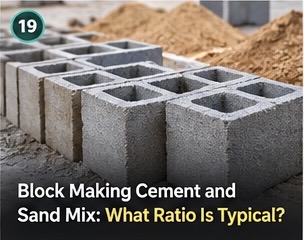
The quality of sandcrete blocks is influenced by cement content, aggregate grading, water, compaction, moulding equipment and curing. Adding more cement without controlling the other variables does not guarantee a reliable block.
Select and prepare the sand
Use suitable, clean sand with a consistent grading and low levels of clay, organic matter and harmful contaminants. Screen or process it as required by the production method. Keep the source consistent and avoid allowing rainwater or soil to contaminate the stockpile.
Control batching and water
Use a repeatable measured batching system and record the quantities used per production batch. Add water gradually to achieve the moisture condition required by the machine and mix. Excess water can weaken the units and distort them during demoulding; too little can prevent proper compaction.
Compaction, curing and testing
Maintain the block machine and use consistent vibration or compaction settings. Cure newly made blocks under controlled moist conditions as required by the applicable standard and production specification. Allow the required curing and strength-development period before handling, stacking or selling. Test representative units where quality assurance requires it.
Specify blocks for their intended use
Block dimensions, density and compressive strength should meet the relevant project requirements and applicable Nigerian standards. Do not rely on appearance or a seller’s claim alone for loadbearing work; request evidence of conformity and professional approval.
Frequently asked questions
What is the key consideration when good blocks depend on controlled production, not cement alone?
Use suitable, clean sand with a consistent grading and low levels of clay, organic matter and harmful contaminants. Screen or process it as required by the production method. Keep the source consistent and avoid allowing rainwater or soil to contaminate the stockpile.
Does the same approach work for every project?
No. Requirements vary with design, materials, site conditions and intended use. Follow the project specification and confirm uncertainties with the responsible professional.
Where should I get project-specific advice?
Consult the qualified engineer, builder or quantity surveyor responsible for your project. Use this guide as general background, not as a substitute for approved drawings or specifications.
Let’s help you plan your next order.
Tell us your required quantity, preferred brand and delivery location. Our team can help you request a quotation.